
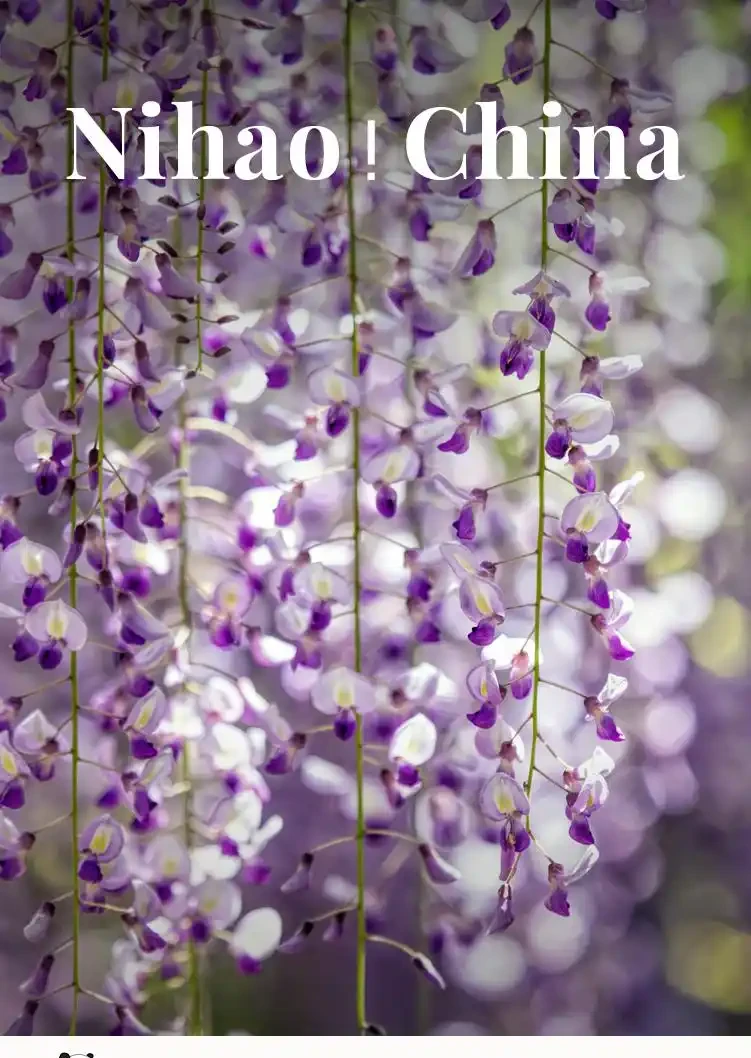
紫藤是一種充滿古典韻味的藤本植物,憑藉其優雅的花姿和獨特的生長習性,成為庭院與園林中常見的觀賞花卉。它的美不張揚,卻以垂墜的花穗和清新的香氣吸引目光。
Wisteria is a climbing vine that exudes classical charm. With its graceful blooms and distinctive growth habits, it has become a popular ornamental plant in courtyards and gardens. This beloved climbing vine captivates not with flamboyance, but with quiet beauty—its cascading blossoms and gentle fragrance leaving a lasting impression on all who encounter it.
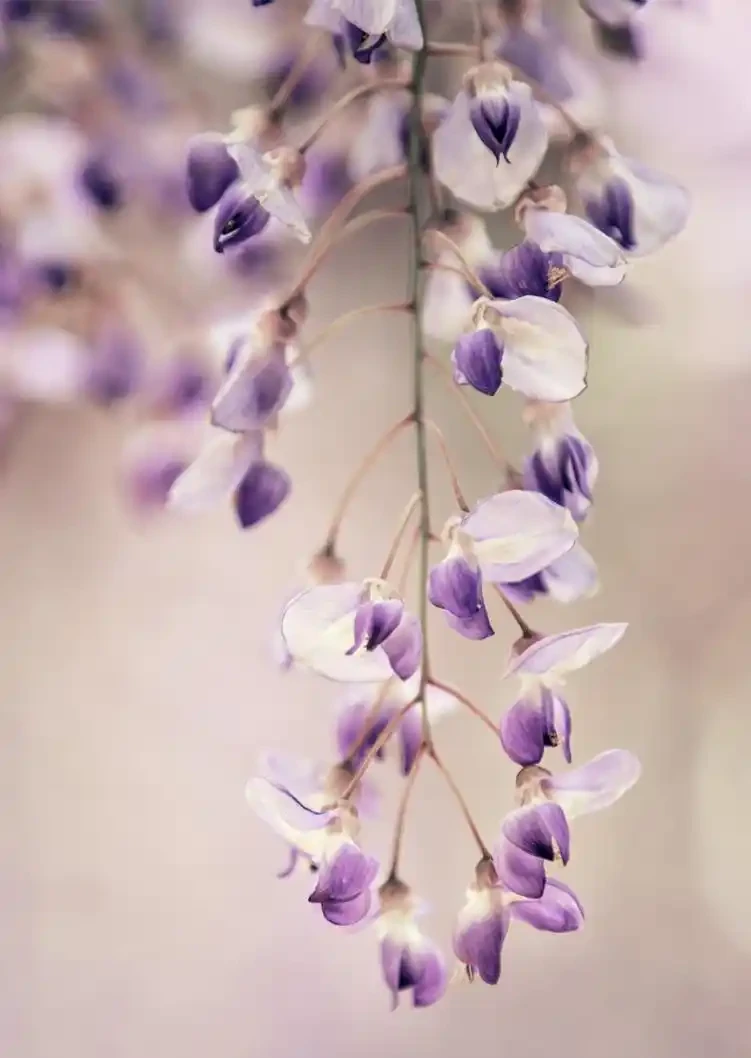
紫藤最顯著的特徵是它的穗狀花序,成串的花朵從枝頭垂落,長度可達20-50公分,遠看如同傾瀉而下的紫色瀑布。每朵小花呈蝶形,由上下兩片花瓣包裹著花蕊,基部略帶弧度,形似展翅的蝴蝶。花色以淡紫色為主,也有白色、粉紫色品種,初開時色澤明豔,隨著開花期推移逐漸轉為淺紫。嫩綠的羽狀複葉與花穗相映,更顯清新。
The most striking feature of the wisteria is its drooping flower spikes—lush clusters that hang from the branches like a purple waterfall, measuring 20 to 50 centimeters in length. Each blossom resembles a butterfly, with upper and lower petals delicately enclosing the stamen, and a slightly curved base that mimics a butterfly』s open wings. While lavender is the classic hue, wisteria also graces the landscape in soft whites and romantic pink-purples. As the flowers bloom, their colors glow richly, then fade to a whisper of violet as the days pass. Their beauty is framed by light green, feather-like leaves, which only enhance their refined presence.
每年4月中旬至5月上旬,紫藤如期開放,盛放時滿架紫雲,落花時地面鋪滿紫色花瓣的景象同樣動人,但開花期僅僅只持續一週左右,十分短暫,因此每到紫藤開放的時節,總會吸引很多遊人打卡駐足。
Wisteria blooms each year between mid-April and early May, transforming trellises and walkways into living cascades of purple. For a brief week, the flowers appear like drifting clouds, and when they fall, the ground is strewn with petals like spilled ink in a dream. The flowering period is fleeting—lasting only about a week—which makes its beauty all the more cherished. During this short time, many visitors flock to witness the spectacle and capture the moment.
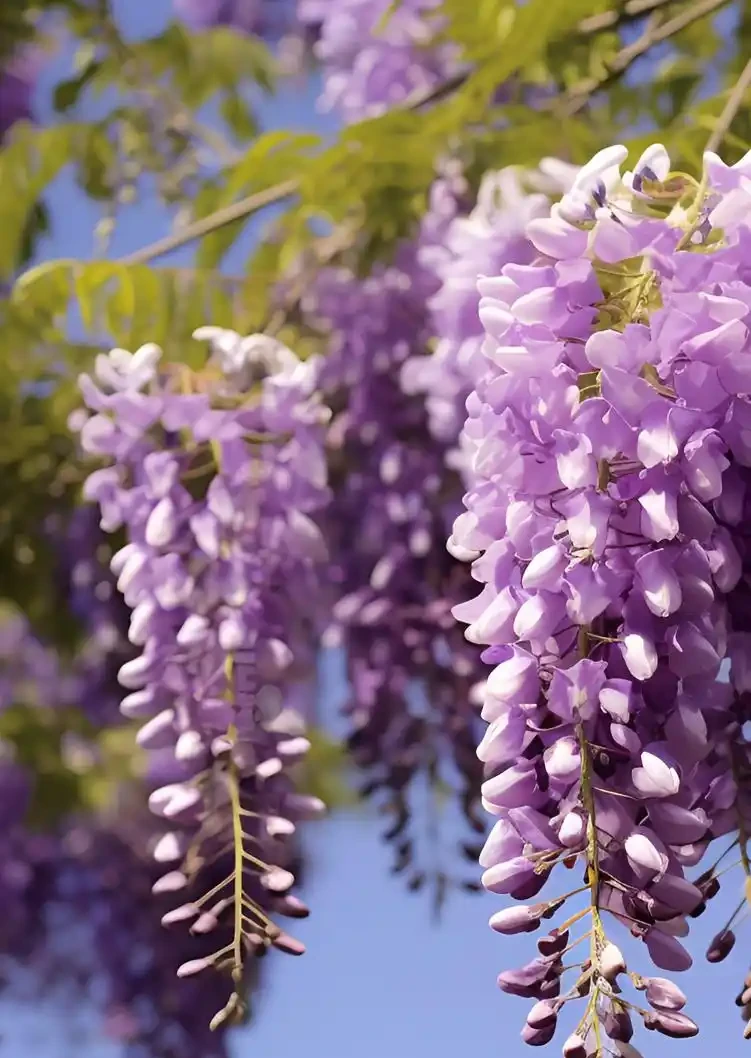
紫藤語包含多重含義:其堅韌的藤蔓象徵「不屈的生命力」,纏綿的攀爬姿態衍生出「為情而生,為愛而亡」的深情寓意,而垂墜的花穗則被賦予「守望幸福」的期許。在古代文人筆下,紫藤花常被用來隱喻含蓄而持久的情感,現代也引申出「沉迷的浪漫」之意。
The flower language of wisteria carries rich symbolism. Its resilient vines represent unyielding vitality; its entwining, clinging growth evokes the deep sentiment of living and dying for love; and its drooping flower spikes convey a gentle wish for lasting happiness. In ancient Chinese literature, wisteria often symbolized restrained, enduring affection, while in modern interpretations, it has come to represent captivating romance.